Branching Out: A Narrative Wayfinding Experience
Tree Height Clue Station — Scarlet Oak, Davis Bike Scavenger Hunt
Role: Experience Designer
Tools: Illustrator, InDesign, Photoshop
Course Project: UC Davis DES 187 – Narrative Environments
Completed: Spring 2019
As part of a collaborative course project between UC Davis and the City of Davis, Branching Out invited participants of all ages and abilities—family teams, traditional bicyclists, and e-bike riders—to explore the city’s urban forest through a playful scavenger hunt. Sixteen themed stations were designed by student teams to activate curiosity, deliver public education, and strengthen place-based storytelling.
I was one of the station designers, assigned the Scarlet Oak tree at 518 Antioch Drive. My task was to transform a quiet corner of a neighborhood street into a site-specific learning environment—one that merged wayfinding, interpretation, and interaction to teach visitors how to measure a tree’s height and understand the impact of canopy trees in urban design.
Design Approach
Framed through the lens of narrative wayfinding and environmental graphics, I created a tactile and visual system that guided users through a self-paced experience:
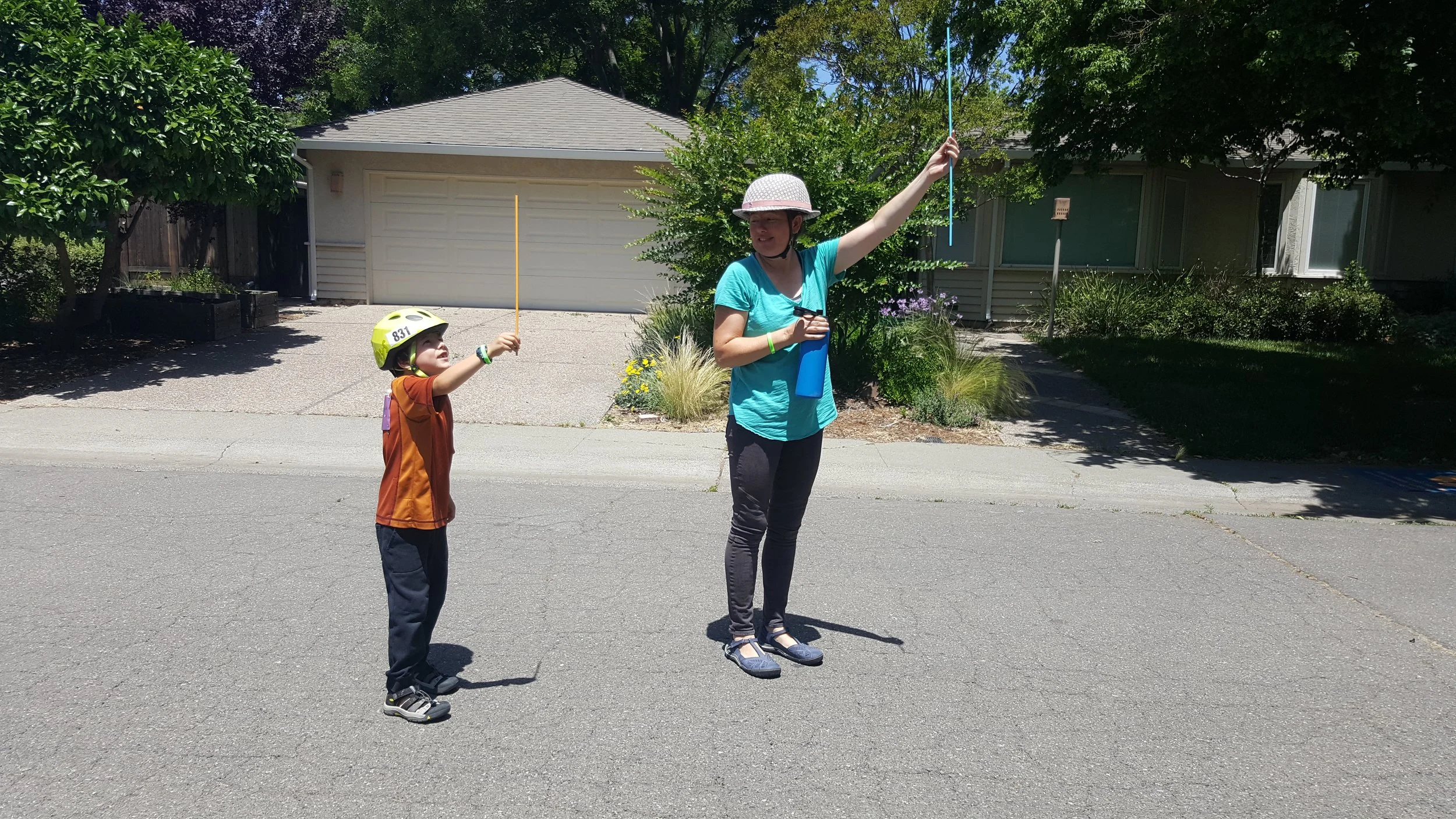
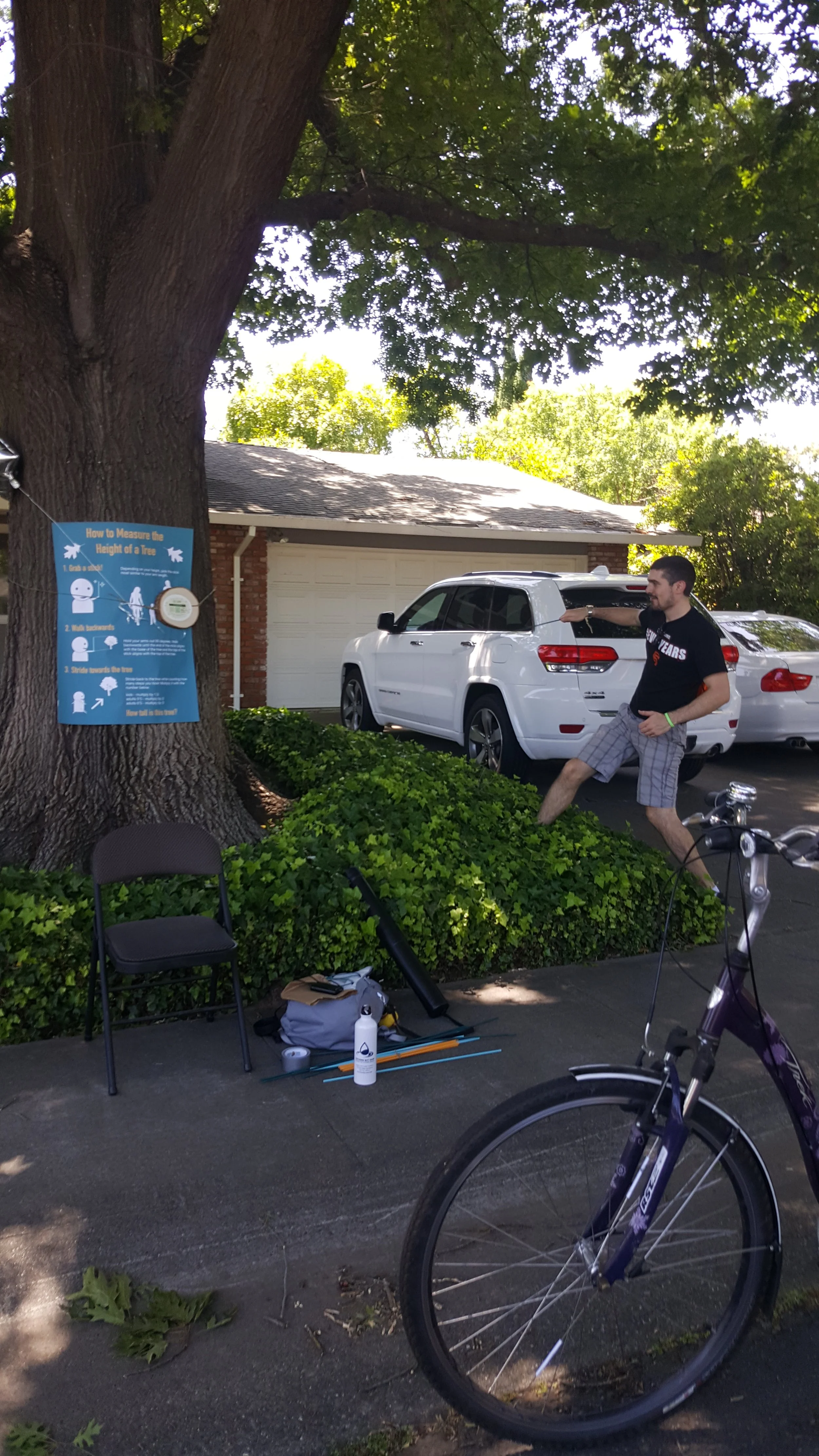
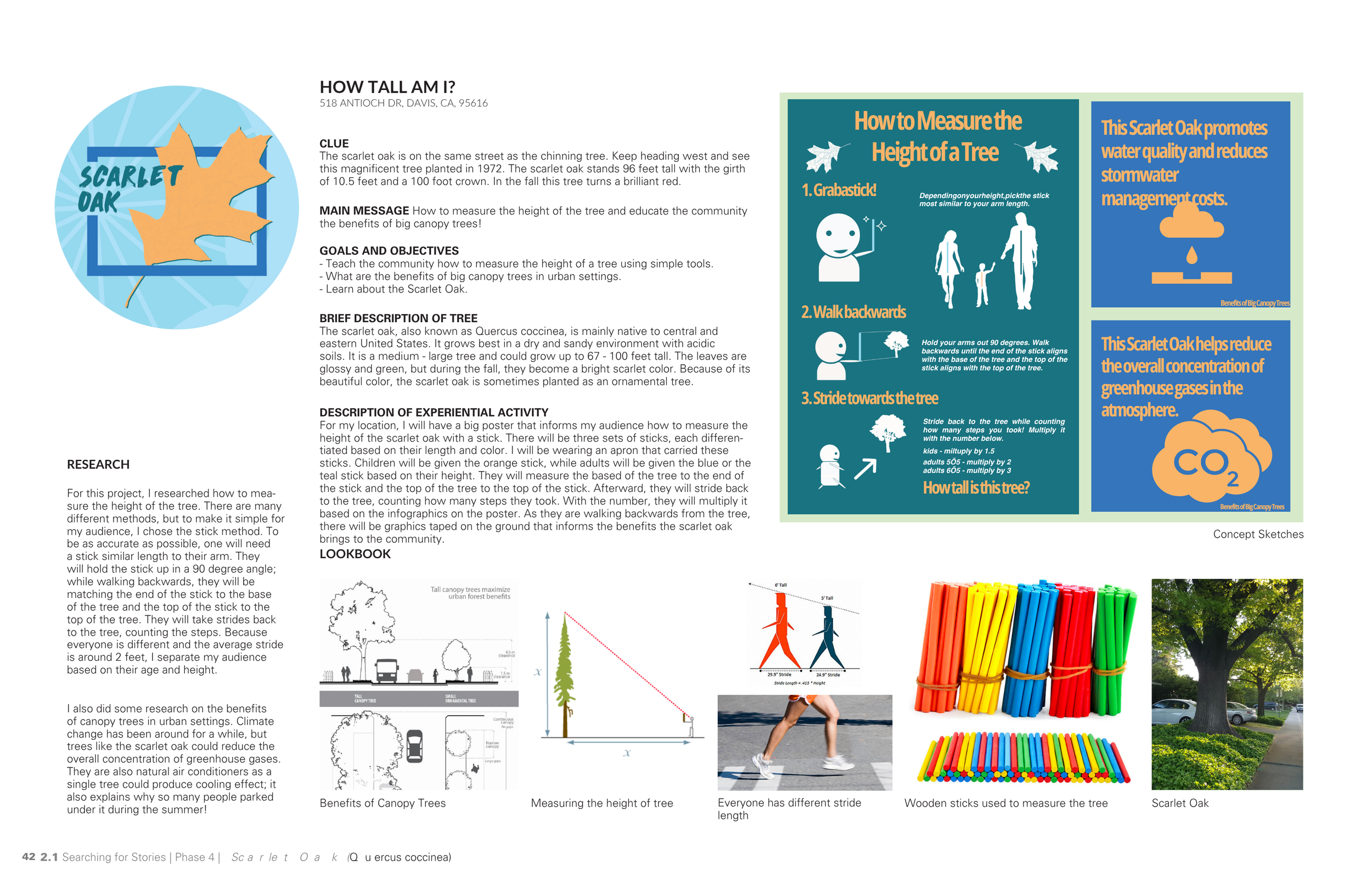
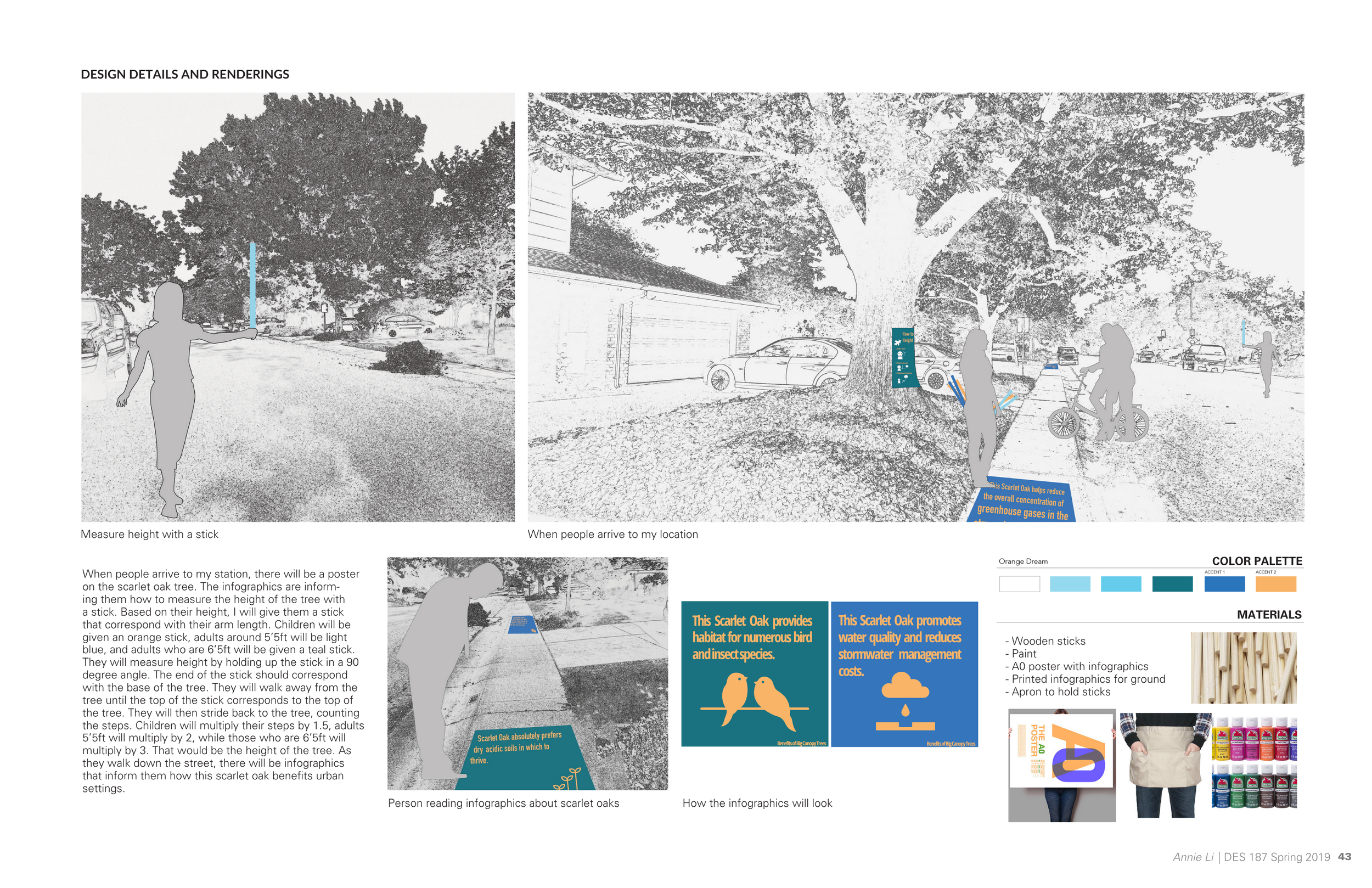
Infographic signage clearly outlined how to use the “stick method” to estimate tree height
Color-coded measuring sticks (distributed by age/height) made the experience inclusive and intuitive
Ground graphics and environmental signage extended the narrative, revealing facts about the Scarlet Oak’s history, scale, and ecological benefits as users moved through the space
A facilitator apron carried the measuring tools, bringing a layer of analog interactivity to the experience
By treating signage as both a navigational and interpretive tool, I designed a temporary intervention that felt purposeful, accessible, and rooted in place.
Design Goals
Build a human-centered activity that invites hands-on participation and intergenerational learning
Reinforce urban forestry awareness through engaging visual systems
Use scale, color, and movement to create a sense of flow, curiosity, and discovery
Craft a micro-experience that stands alone, yet contributes to a larger city-wide story
Outcome
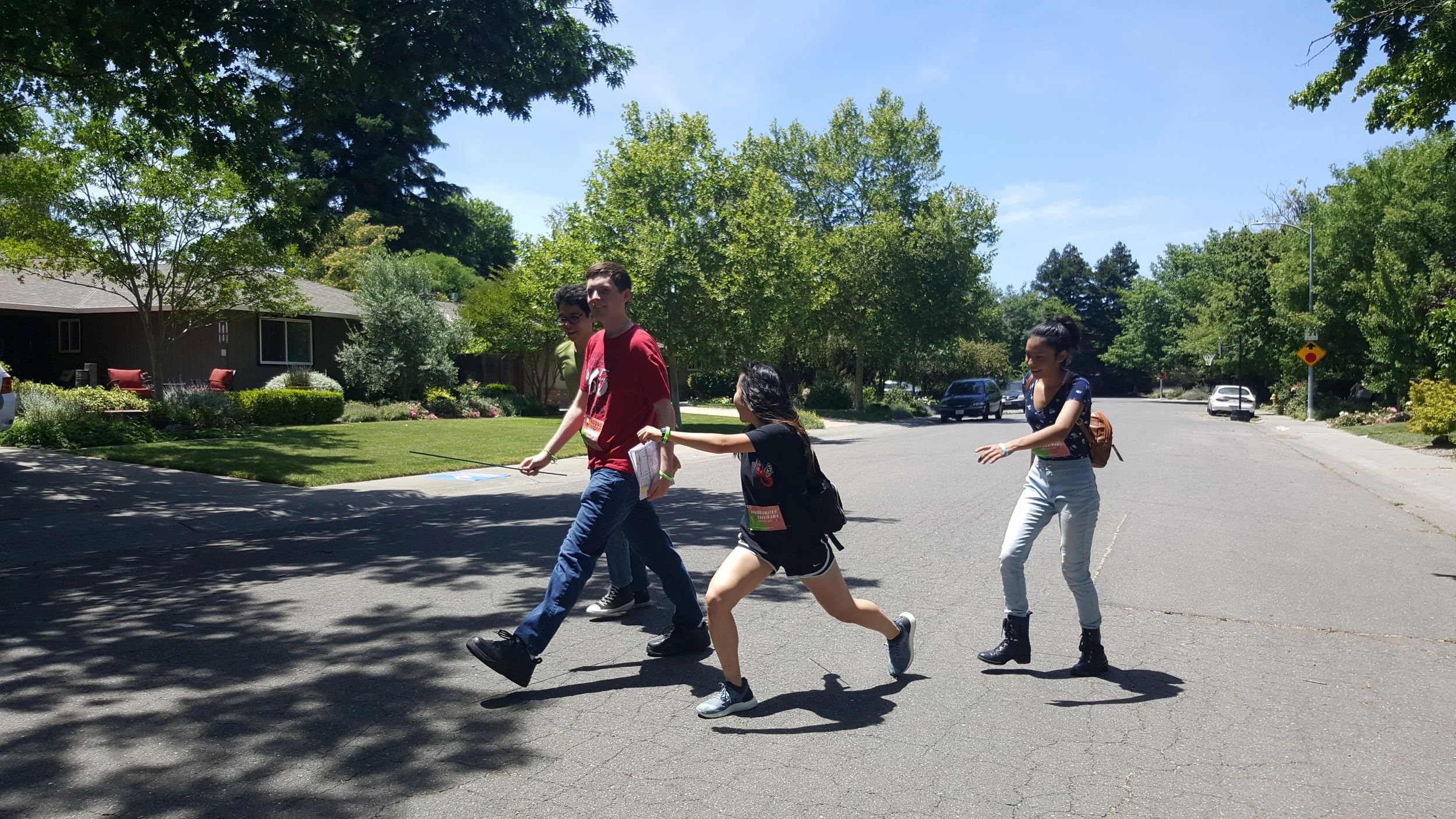
Participants were not just given information; they were guided through a mini adventure that layered physical movement with environmental storytelling. The project demonstrates how experiential signage and wayfinding can turn a public space into a meaningful touchpoint for connection, learning, and play.
View Full Project here